
Fiber Splitter Applications Explained Uses in Networks Data Centers and Telecom
The fiber optic splitter is a vital device in optical networking, enabling a single light signal to be divided into multiple outputs. Its passive operation makes it indispensable across industries, including telecommunications, data centers, and industrial automation. By efficiently managing optical signal distribution, fiber splitters are a backbone technology that supports high-speed internet, FTTH deployments, and large-scale data transmission.
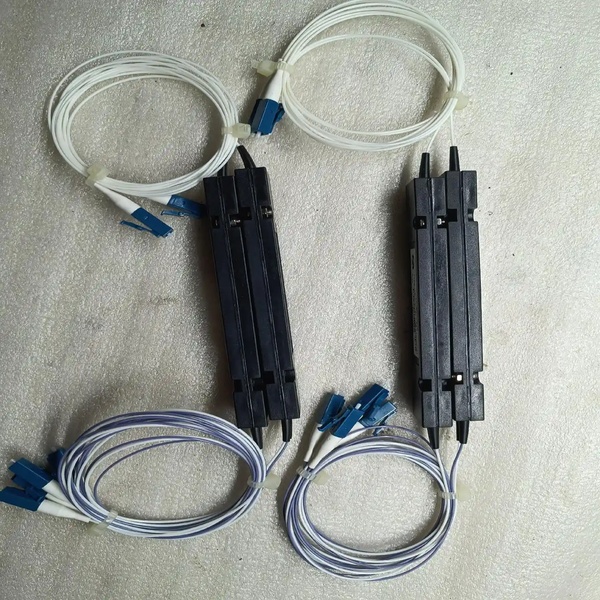
How Does a Fiber Splitter Work?
A fiber splitter works by passively dividing incoming optical signals into multiple output paths according to a predefined split ratio. It does not require external power and is especially critical in Passive Optical Networks (PON), where one optical fiber is shared by multiple users.
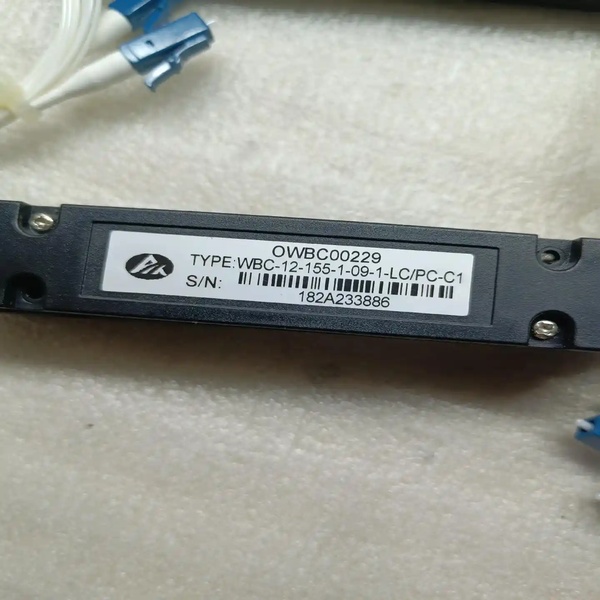
The splitting process relies on a waveguide structure, which evenly directs the light beam into separate paths. This waveguide may take the form of a simple fused biconical taper or a more advanced planar lightwave circuit (PLC). During this process, some insertion loss occurs, meaning a slight reduction in signal power due to division. The extent of this loss depends on the split ratio, making component quality essential for reliable network performance.
Applications of Fiber Splitter
Optical Networks and Passive Optical Networks (PON)
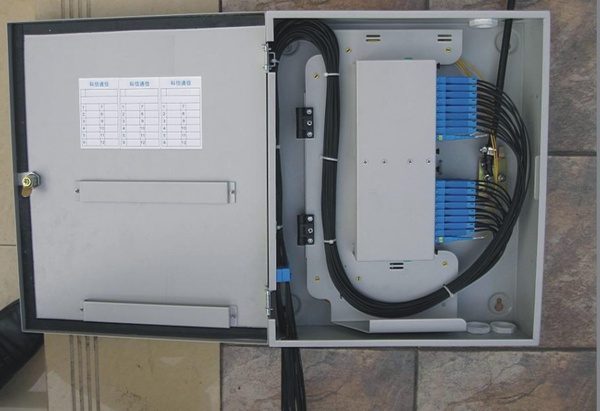
In optical networks, especially PON, the fiber splitter is central to distributing signals from one line to multiple endpoints. This technology underpins broadband internet access in residential, commercial, and metropolitan areas.
Telecommunications Industry
Within telecommunications, fiber optic splitters are indispensable for FTTH (Fiber-to-the-Home) and FTTP (Fiber-to-the-Premises). By dividing optical signals, they allow every subscriber to receive fast and stable internet, voice services, and IPTV streaming.
Local Area Networks (LANs)
Fiber splitters also support LAN environments, helping offices, universities, and enterprises connect multiple devices—such as computers, servers, and printers—using a single fiber link. This provides cost-effective scalability when expanding local networks.
Data Centers
Data centers rely on optical splitters to manage high volumes of data traffic. They distribute signals from fiber core switches to multiple racks or servers, ensuring optimized performance, scalability, and efficiency for large-scale data operations.
Industrial Automation and Control Systems
In industrial automation, fiber splitters transmit control signals over long distances with minimal degradation. By distributing signals to machines and devices, they enable synchronized and efficient operations in automated facilities.
Additional Applications
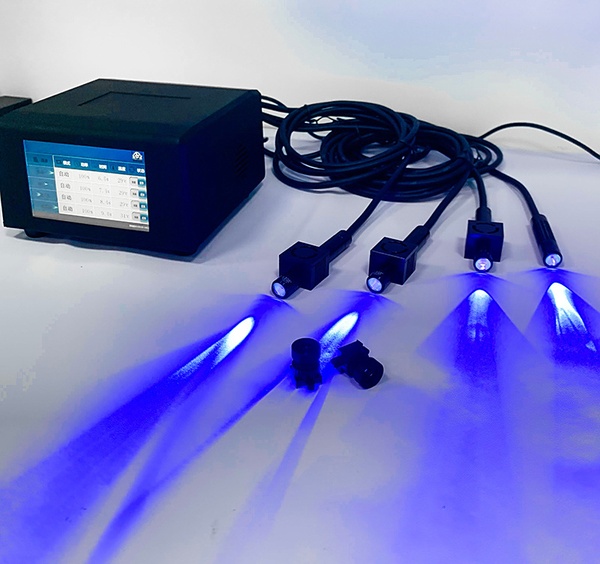
Beyond telecom and networking, optical splitters are widely used in CCTV surveillance systems, fiber optic sensing, laboratory testing, and research. Their versatility proves valuable wherever reliable and efficient optical signal distribution is required.
Benefits of Fiber Splitter
-
Cost-Effectiveness: By dividing a single fiber into multiple paths, fiber splitters significantly lower deployment and maintenance costs.
-
Flexibility and Scalability: They allow seamless network expansion or reconfiguration, making them highly adaptable for changing demands.
-
Minimal Signal Loss: High-quality splitters ensure low insertion loss, maintaining strong signal quality over long distances with minimal degradation.
Conclusion
The fiber splitter is an essential component in modern optical networks. From PON deployments and telecommunications to data centers and industrial systems, it enables efficient distribution of optical signals with cost savings, flexibility, and reliability. As global demand for high-speed connectivity continues to rise, the role of fiber optic splitters in optimizing resources and ensuring seamless data transmission will remain indispensable.
We are a manufacturer of optical fiber and optical cables, including indoor and outdoor cables, non-metallic cables, flame-retardant cables, bundled tube cables, ribbon cables, data center cables, underwater cables, submarine cables, optoelectronic composite cables, base station field cables, drone cables, and detection and sensing cables. We offer affordable optical cables and also manufacture ancillary optical equipment, such as fiber optic splitters, multimode optical fibers, fiber optic connectors, fiber optic patch cords, fiber optic adapters, fiber splitters, and Category 5, 6, and 7 network cables. For fiber optic splitter pricing, please contact us. Fiber optic splitter price, fiber optic splitter manufacturer
Some pictures are from the Internet. If you have any questions, please contact us.