
What Is AWG in Ethernet Cables? A Complete Guide to American Wire Gauge
When browsing for Ethernet cables, you may notice that not only do cables differ in length, but the actual cable size can vary as well. Although each manufacturer may design cables with slight differences, the conductor sizes are based on a universal standard. That standard is known as AWG (American Wire Gauge). In this article, we’ll explain what AWG size means and why it’s important when choosing the right cable.
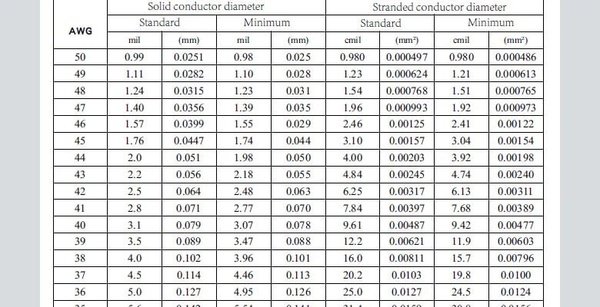
What Is AWG?
On the jacket of most Ethernet cables, you will often see an AWG marking, which stands for American Wire Gauge. This is the standardized measurement system used in North America to indicate wire thickness. By providing a consistent reference, the AWG standard allows manufacturers to produce conductors that meet uniform sizing requirements. This ensures compatibility and performance across different products.
Understanding AWG in Ethernet Cable
The AWG number represents the steps of wire drawing, a metalworking process where wire diameter is reduced by pulling it through dies. Because of this process, the AWG number and the actual wire size have an inverse relationship:
-
A smaller AWG number means a thicker conductor. For example, 22 AWG cable is larger than 28 AWG cable.
-
A larger AWG number means a thinner conductor. For instance, 26 AWG cable is smaller than 24 AWG cable.
Additionally, stranded cables usually have slightly bigger outer diameters than solid conductors. This makes stranded Ethernet cables more flexible, which can be useful in certain installations.
AWG Size Chart for Solid Conductors
Below is a reference chart showing sample AWG sizes and their approximate diameters:
| AWG Size | Diameter (mm) | Diameter (Inch) |
|---|---|---|
| 30 AWG | 0.251 mm | 0.0099 inch |
| 29 AWG | 0.284 mm | 0.0112 inch |
| 28 AWG | 0.318 mm | 0.0125 inch |
| 27 AWG | 0.358 mm | 0.0141 inch |
| 26 AWG | 0.405 mm | 0.0159 inch |
| 25 AWG | 0.455 mm | 0.0179 inch |
| 24 AWG | 0.511 mm | 0.0201 inch |
| 23 AWG | 0.576 mm | 0.0226 inch |
| 22 AWG | 0.643 mm | 0.0253 inch |
Note: These values are for demonstration purposes only. Always check the manufacturer’s specifications for accurate details.
Using AWG Size Information
When choosing connectors like RJ45 plugs, it’s important to match the AWG cable size with the correct connector type. For example, a 23 AWG Ethernet cable should be paired with 23 AWG RJ45 connectors for best performance. Also, make sure that the connector type—whether shielded, unshielded, solid, or stranded—matches the cable’s design.

Final Thoughts
Understanding AWG (American Wire Gauge) is crucial when buying Ethernet cables or selecting connectors. It helps ensure compatibility, maintains performance, and simplifies the installation process. By paying attention to AWG size, you can make better decisions for both small-scale and enterprise networking setups. If you have further questions, feel free to contact us for professional guidance.
We are a professional Cat6 Ethernet cable manufacturer, producing a full range of fiber optic cables and network cables, including indoor fiber optic cables, outdoor fiber optic cables, non-metallic cables, flame-retardant cables, loose tube cables, ribbon cables, data center cables, underwater cables, submarine cables, hybrid power and fiber optic cables, base station field cables, UAV cables, and sensing cables. Our network cables are available at competitive Cat6 Ethernet cable prices, ensuring both quality and cost-effectiveness.
Besides Cat6 Ethernet cables, we also manufacture related fiber optic and networking products such as optical splitters, multimode fiber, fiber connectors, fiber patch cords, fiber adapters, Cat5e cables, Cat7 cables, and more.
As a trusted Cat6 Ethernet cable supplier, we offer wholesale Cat6 cables. For inquiries about Cat6 Ethernet cable prices or bulk purchasing, please feel free to contact us.
Some of our content is obtained from the Internet. If there is any inappropriateness, please contact us.