
Understanding Fiber Optic Cable Types – Single Mode and Multimode
Introduction to Fiber Optic Cables in Modern Networks
Fiber optic cables and connectors are essential components in nearly every communication system, from DAS installations to wireless base stations with high-speed backhaul. Understanding the differences between multimode fiber and single mode fiber, as well as their associated fiber connectors, allows for more productive discussions with clients and ensures optimal network performance.
Before reading this article, if you’d like to know where to buy fiber optic cable, feel free to contact us. Now let’s begin the main content.
Whether you are deploying fiber jumpers in a data center or connecting a base station, the choice of fiber optic cable type significantly affects signal quality, bandwidth, and distance.
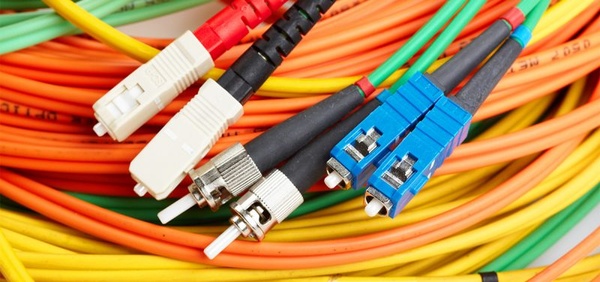
Basics of Signal Transmission with Fiber Optic Cables
Digital Light Signals
In fiber optic communication, signals are transmitted as pulses of light generated by lasers inside the networking hardware. Similar to copper cables that use electrical pulses to represent binary ones (1) and zeros (0), fiber optic cables use light pulses: presence of light = 1, absence of light = 0. This simple principle underpins all modern optical networks.
The Optical Core
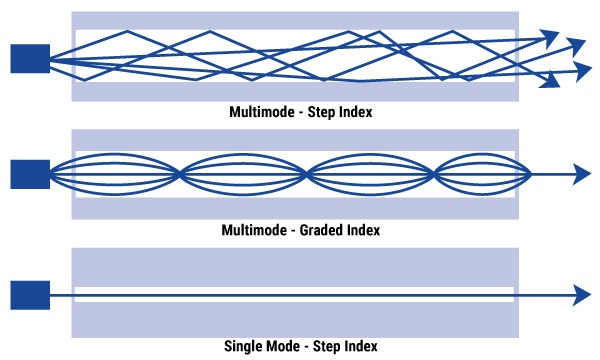
The heart of a fiber optic cable is its glass core, which reflects light internally to propagate signals over long distances without external power. Depending on the cable type, signals can travel tens of miles before requiring regeneration. The core size plays a critical role in signal propagation: smaller cores typically allow single mode fiber to transmit signals farther than multimode fiber, which uses a larger core for short-distance, high-bandwidth applications.

Optical Fiber Core Sizes and Their Impact
| Fiber Type | Core Diameter | Typical Use | Light Source |
|---|---|---|---|
| Single Mode Fiber (SM) | 8–9 µm | Long-distance, high bandwidth | Laser |
| Multimode Fiber (MM) | 50–62.5 µm | Short-distance, medium bandwidth | LED |
Smaller single mode cores maintain tighter light reflections, allowing signals to travel longer distances with minimal dispersion. Multimode cores allow multiple light paths, supporting high-bandwidth short-distance networks but can cause distortion over long runs.
Understanding Light Propagation and Wavelengths
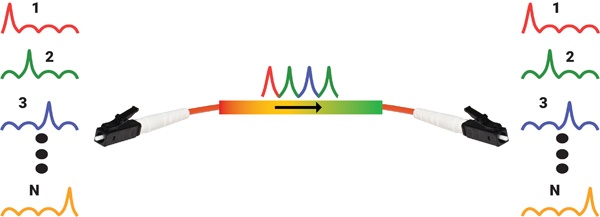
Different wavelengths of light behave like distinct colors traveling through the fiber core, similar to how copper cables carry various RF frequencies. Lasers can be tuned to specific wavelengths, allowing wavelength division multiplexing (WDM) or dense WDM (DWDM) for transmitting multiple data channels simultaneously.
| Fiber Type | Standard Wavelengths |
|---|---|
| Multimode Fiber | 850 nm, 1300 nm |
| Single Mode Fiber | 1310 nm, 1550 nm |
Multimode fibers operate at shorter wavelengths suitable for data centers and enterprise networks, while single mode fibers support longer distances and higher bandwidth, making them ideal for backbone and metro networks.
Multimode Fiber Types – OM1, OM2, OM3, OM4, OM5
OM1 and OM2
OM1 and OM2 multimode fibers are designed for short-haul applications like LANs and private networks. OM1 features a 62.5 µm core, while OM2 uses a 50 µm core, doubling transmission distance compared to OM1. Both use LED light sources for signal propagation.

OM3 – Laser-Optimized Multimode
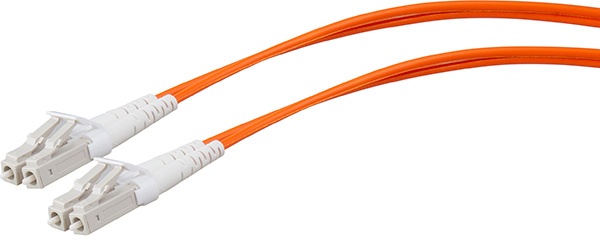
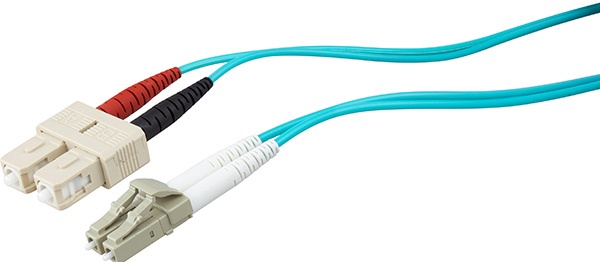
OM3 fibers have a 50 µm core optimized for laser sources, enabling 10G Ethernet over 300 meters. These fibers support 40G and 100G speeds with MPO connectors, ideal for larger private networks.
OM4 – High-Speed Multimode
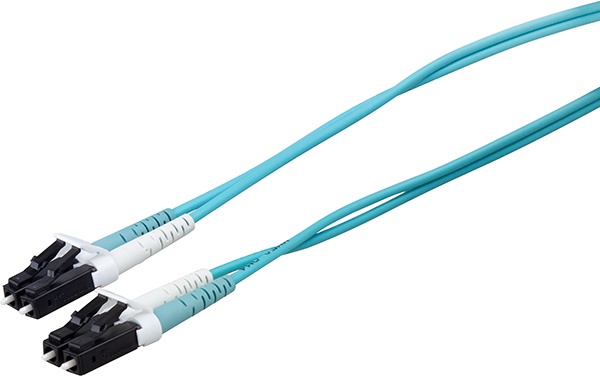
OM4 fibers share a 50 µm core but are designed for longer distances and higher speeds, supporting 10G up to 550 meters and 100G up to 150 meters, suitable for data centers and corporate campuses.
OM5 – Short Wavelength Division Multiplexing (SWDM)
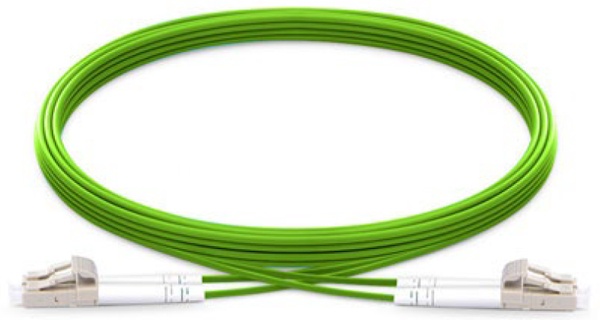
OM5 multimode fibers support multiple wavelengths (850–953 nm) and higher data rates (40G/100G), ensuring compatibility with OM3 and OM4 cabling. OM5 is ideal for high-speed networks that demand greater link distances.
Single Mode Fiber Types – OS1 and OS2
Single mode fibers use an 8–9 µm core and transmit light through a single path, minimizing attenuation and allowing signals to travel longer distances.
OS1 – Tight Buffered Cable
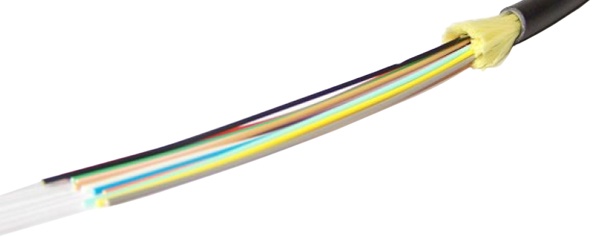
OS1 cables are indoor fibers with a protective dual-layer coating, providing flexibility, crush resistance, and easier installation. They can support up to 10G speeds over approximately 10 km.
OS2 – Loose Tube Cable
OS2 cables are designed for outdoor applications such as long-distance backbone networks and direct burial. Each fiber is loosely housed in a gel-filled tube, supporting 100G speeds over 200 km.
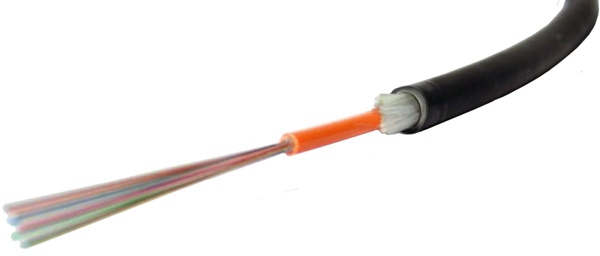
Single mode fibers are typically yellow for jumpers but may vary depending on the jacket type. They are optimal for high data rates, long-distance spans, and future-proofing network infrastructure.
Keeping Fiber Optic Connectors Clean
The most common issue in fiber networks is dirty connectors, which can reduce signal quality. Fiber optic cleaning boxes, inspection scopes, and visual fault locators (VFL) are essential tools. Regular cleaning ensures optimal performance and longevity of both single mode and multimode fibers.
Figure 1: Fiber Optic Cleaning Tools – cleaning box, inspection scope, and VFL.
FAQ – Fiber Optic Cable Types
Q1: What is the difference between single mode and multimode fiber?
A: Single mode fiber has a smaller core (8–9 µm) and supports long-distance, high-speed transmission using lasers. Multimode fiber has a larger core (50–62.5 µm), supports short-distance applications, and typically uses LEDs.
Q2: What are OM1, OM2, OM3, OM4, and OM5 fibers?
A: These are multimode fiber types, distinguished by core size, light source optimization, and data transmission capabilities. OM3 and OM4 are laser-optimized, while OM5 supports multiple wavelengths for SWDM.
Q3: When should I use OS1 or OS2 single mode fiber?
A: Use OS1 for indoor moderate-distance applications (up to 10 km). Use OS2 for outdoor, long-distance installations (up to 200 km) or backbone networks.
Q4: Why is fiber cleaning important?
A: Dirt and dust on fiber connectors can block light pulses, causing signal loss. Regular cleaning with a fiber optic cleaning kit maintains network performance.
We are a professional fiber optic manufacturer specializing in producing a wide range of fiber optic cables, including indoor fiber optic cables, outdoor fiber optic cables, non-metallic cables, flame-retardant cables, loose tube cables, ribbon cables, armored fiber optic cables, data center cables, underwater cables, submarine cables, composite fiber optic cables, base station and field cables, UAV fiber optic cables, and sensing cables.
Our fiber optic products are reliable and cost-effective. In addition to cables, we also manufacture supporting fiber optic components such as optical splitters, multimode fibers, fiber optic connectors, fiber patch cords, fiber adapters, and network cables (Cat5e, Cat6, Cat7).
We are an armored fiber optic cable manufacturer offering wholesale supply and customized solutions. If you are looking for armored fiber optic cable prices or need a reliable armored fiber optic cable supplier, please contact us for more details.
Some images and text in this article are sourced from the internet. If any issues arise, please contact us for resolution.