
Fiber Optic Cable Speed Explained: The Ultimate Guide
Fiber optic cables have completely reshaped modern connectivity by offering lightning-fast data transmission and unmatched reliability. With commercial fiber optic cable speeds reaching 100 Gbps and laboratory breakthroughs exceeding 1.02 petabits per second, this technology far surpasses what traditional copper cabling can deliver.
This guide breaks down everything you need to know about fiber internet, including how it works, its speed advantages, technical performance factors, and why businesses and consumers rely on it for the future of high speed internet.

What Is Fiber Internet?
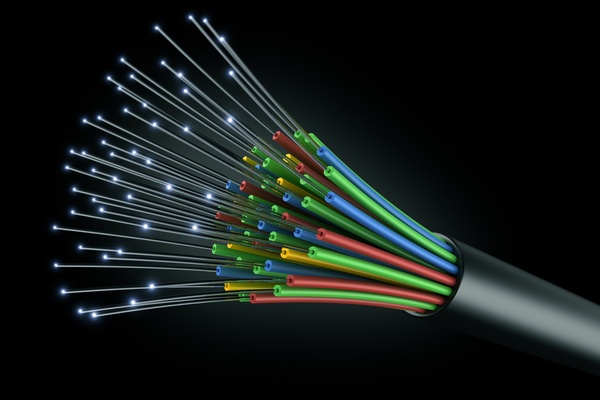
Fiber internet is a type of high speed internet that transmits data as light pulses through strands of glass or plastic. Each fiber optic strand, thinner than human hair, moves information at nearly 70% of light’s velocity. Compared with traditional copper networks, fiber stands out due to its superior speeds, symmetrical upload and download rates, and long-term reliability.
Common services also include fiber optic cable repair, ensuring maximum performance and minimal downtime.
How Fiber Optic Technology Works
Unlike copper cables, which rely on electrical currents, fiber optic technology carries information as beams of light. This creates significant advantages:
| Feature | Fiber Optic Cable | Copper Cable |
|---|---|---|
| Transmission Medium | Light pulses | Electrical signals |
| Max Speed | Up to 100 Gbps | Up to 300 Mbps |
| Distance Without Signal Loss | 200+ km | A few hundred feet |
| Interference | Virtually none | Highly susceptible |
| Bandwidth Capacity | Virtually unlimited | Very limited |
The science behind fiber optic speed lies in total internal reflection, which preserves signal strength over long distances without the resistance and interference that slow down copper systems.
Fiber Optic Cable vs Copper Cable
The debate of fiber optic cable vs copper cable isn’t even close. Fiber supports data rates up to 100 Gbps, while copper struggles to deliver 300 Mbps under ideal conditions. Other advantages include:
-
Higher bandwidth capacity
-
Minimal signal loss over long distances
-
Immunity to electromagnetic interference
-
True future-proof potential for growing internet demands

Maximum Fiber Optic Cable Speeds
Commercially, fiber optic internet speeds range from 100 Mbps to 100 Gbps. However, advanced research has reached incredible benchmarks:
-
World record: 1.02 petabits per second across 1,800+ km
-
Research results: 402 Tbps using advanced fiber techniques
-
Enterprise-grade networks: Up to 100 Gbps for mission-critical applications
Fiber Internet Speed in Real Life
On average, fiber optic internet delivers around 1 Gbps to households—10 to 20 times faster than cable internet. Businesses often deploy speeds up to 100 Gbps. This speed advantage means:
-
Large file transfers in seconds
-
Cloud backups in minutes
-
Buffer-free 4K streaming
-
Symmetrical uploads and downloads
| Task | Copper 100 Mbps | Fiber 1 Gbps | Fiber 10 Gbps |
|---|---|---|---|
| Download 10GB Database | 13 minutes | 1.3 minutes | 8 seconds |
| Upload 15GB 4K Video | 20 minutes | 2 minutes | 12 seconds |
| Cloud Backup 50GB | 1.1 hours | 7 minutes | 40 seconds |
How Fiber Optic Speed Tests Work
Fiber optic speed tests measure both upload and download performance by transmitting light signals across a cable and calculating the transfer rate. Professional testing equipment ensures that fiber optic installations meet strict performance standards.
Essential tools include:
-
Fiber optic cable tester
-
Optical Time Domain Reflectometer (OTDR)
-
Proper fiber optic connectors
Fiber Optic Speed and Distance
Distance influences fiber optic cable performance:
-
Single mode fiber: Maintains high speeds over 200+ km
-
Multimode fiber: Works best for shorter ranges (300–1,000 m)
-
Attenuation: ~0.2–0.4 dB/km in quality fiber
Single mode fiber offers virtually unlimited bandwidth and is best for long-distance transmission, while multimode fiber is more affordable for shorter connections like campuses or office buildings.
Factors That Impact Fiber Speed
Several variables influence fiber optic performance:
-
Cable type (single mode vs multimode)
-
Distance and attenuation
-
Network design and equipment quality
-
Environmental conditions (temperature, bends, installation quality)
Proper professional installation minimizes these issues, ensuring top speeds.
Cost of Fiber Optic Speed
The faster the fiber optic internet speed, the higher the infrastructure cost. Key pricing factors include:
-
Bandwidth capacity
-
Single mode vs multimode cabling
-
Advanced terminal equipment
-
Installation complexity
While single mode fiber may be more expensive, it offers the best long-term ROI.
How to Improve Fiber Internet Speeds
Ways to optimize fiber optic performance include:
-
Using single mode cables for long-distance applications
-
Implementing optical amplifiers
-
Regular equipment cleaning and maintenance
-
Network architecture optimization
Professional installation ensures maximum performance and prevents common issues like connector loss or cable bending.
Future of Fiber Optic Cable Speeds
Emerging technologies promise even greater speeds:
-
Wavelength Division Multiplexing (WDM) – Transmits multiple light wavelengths at once
-
Space Division Multiplexing – Multi-core fibers delivering petabit speeds
-
Coherent Optical Systems – Advanced modulation achieving 400–800 Gbps per wavelength
These innovations guarantee that fiber optic infrastructure will remain future-proof as demand for faster data continues to grow.
Conclusion
Fiber optic cable speed is transforming how we connect, work, and communicate. With speeds up to 100 Gbps today and future potential in the petabit range, fiber is the most reliable, scalable, and secure option for both homes and enterprises.
For businesses seeking dependable connectivity, investing in fiber optic installation ensures long-term performance, lower latency, and future-ready infrastructure.
We are a professional fiber optic cable manufacturer, producing a wide range of fiber optic cables, including indoor fiber optic cables, outdoor fiber optic cables, non-metallic cables, flame-retardant cables, loose tube cables, ribbon cables, data center cables, underwater cables, submarine cables, hybrid power and fiber optic cables, base station field cables, UAV cables, and sensing cables. Our products are reliable and available at competitive fiber optic cable prices, making them suitable for different communication and networking projects.
In addition to fiber optic cables, we also produce supporting fiber optic equipment such as optical splitters, multimode fiber, fiber connectors, fiber patch cords, fiber adapters, Cat5e cables, Cat6 cables, Cat7 cables, and more.
As a trusted fiber optic cable supplier, we provide wholesale fiber optic cables. If you would like to know more about fiber optic cable prices or purchase in bulk, please feel free to contact us.
This article is original, and some pictures are from the Internet. If there is any inappropriateness, please contact us.