
Optical Fiber Cable ADSS: Complete Guide to Types, Specs, Price & Best Uses
What is Optical Fiber Cable ADSS?
ADSS (All-Dielectric Self-Supporting) optical fiber cable is an aerial fiber cable designed to be installed without a metallic messenger or supporting wire. Its structure contains no conductive metal elements, so it can be strung across utility poles, towers, or between building anchors without grounding concerns — making it safe to install near power lines and in electromagnetic environments. ADSS cables carry single-mode or multi-mode fibers inside dielectric strength members and jackets engineered to withstand wind, ice, UV, and temperature swings.
Before reading this article, if you’d like to know how much fiber optic cable costs, feel free to contact us. Now let’s begin the main content.
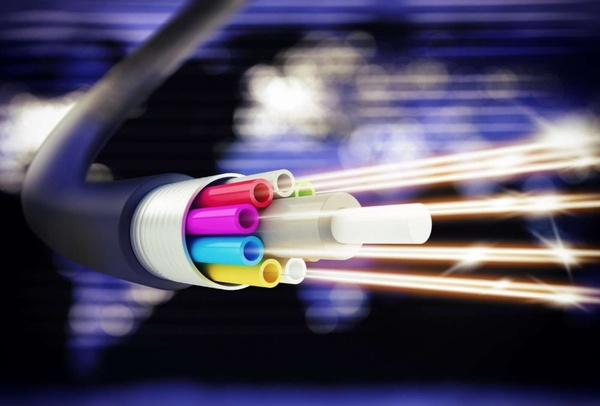
Types and Classifications
By Fiber Count and Application
-
Drop / Low-count ADSS (1–12 fibers): for short spans, FTTH drop and local aerial links.
-
Feeder / Medium-count ADSS (12–72 fibers): ideal for distribution and feeder routes.
-
High-count ADSS (72–288+ fibers): backbone aerial runs where large capacity is required.
By Construction / Environment
-
Single-jacket vs. Double-jacket: Double PE jackets or reinforced jackets are used for improved abrasion and UV resistance near coastal or high-traffic zones.
-
Dry-block vs. Gel-filled Loose Tube: Dry water-blocking (water-swellable yarns/tapes) simplifies handling and splicing; gel-filled tubes are traditional for moisture protection.
-
Anti-track / Anti-rodent variants: add termite/rodent protection layers for certain regions.
By Span & Mechanical Design
-
Short-span ADSS: optimized for spans under 100 m with lighter strength members.
-
Long-span ADSS: designed for 200–400 m (or more) with larger dielectric strength members, increased sag control and thermal/tension allowances.
Typical Specifications
-
Fiber Types: G.652 (standard single-mode), G.657 (bend insensitive) commonly used.
-
Fiber Counts: common SKUs: 4, 6, 12, 24, 48, 72, 96, 144, 288.
-
Jacket Materials: PE for outdoor, LSZH for special regulatory areas.
-
Operating Temperature: typically −40°C to +70°C (varies by vendor).
-
Tensile & Crush Ratings: specified per cable design (pulling tensions and long-term loads differ for short vs. long spans).
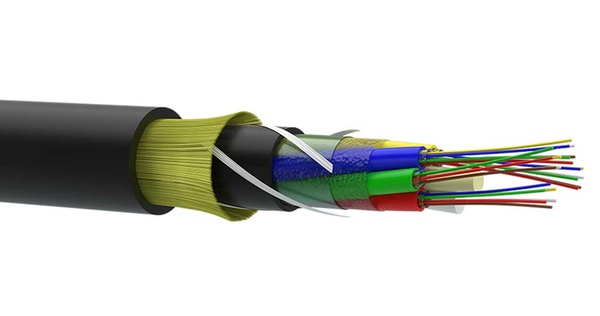
Components and Construction (what’s inside)
-
Optical fibers (loose-tube or ribbon depending on design).
-
Loose tubes holding fibers + water-blocking (dry or gel).
-
Dielectric strength members — aramid yarn (Kevlar), FRP rods — to carry tensile loads.
-
Optional non-metallic armor layers for abrasion/rodent protection.
-
Outer jacket(s) — single or double PE, UV-stabilized.
This all-dielectric structure allows ADSS cables to be used near energized lines without electrical hazards.
Typical Applications and Use Cases
-
Power utility corridors: because ADSS is non-conductive, it’s safe near high-voltage lines.
-
Aerial backbone and distribution: fast deployment on existing poles without messenger wires.
-
Rural long-span links: specially engineered ADSS handles long spans (200–400 m) between towers.
-
FTTx aerial drops and neighborhood feeder lines.
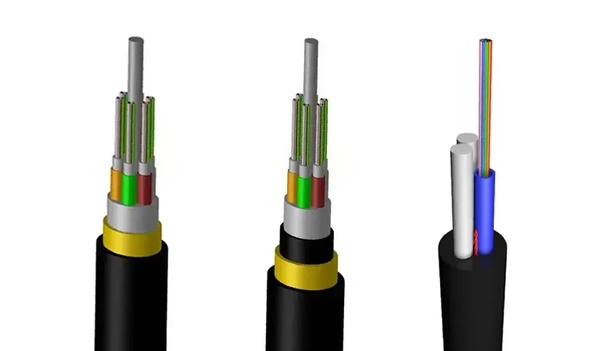
Industries That Rely on ADSS
-
Electric utilities and power-grid communications
-
Telecom carriers and ISPs deploying aerial networks
-
Municipalities and smart-city infrastructure projects
-
Oil & gas and remote industrial sites with aerial rights-of-way
-
Rural broadband initiatives and utility fiber deployments.
Suitable Regions and Climates
ADSS designs are versatile and manufactured for:
-
Cold climates: gels and materials formulated not to become brittle at low temperatures; attention to ice-loading.
-
Hot/tropical climates: UV-resistant PE jackets and materials tolerant to higher ambient temps.
-
Coastal/saline environments: non-corrosive, salt-resistant jacketing and optional protective layers.
-
Windy/seismic areas: long-span mechanical designs, higher strength members and sag control.
Always match the cable design (span rating, ice-load rating, UV rating) to local environmental conditions.
Global Brands and Manufacturers
Major suppliers and regional manufacturers include Prysmian, Nexans, Furukawa, Corning (component level), and several competitive Chinese manufacturers listed on trade platforms. For the purpose of procurement examples and recommendations, JXL can be positioned as a supplier offering ADSS SKUs, customization, and regional logistics support — ensure you request datasheets and span charts from any vendor.
Price (per meter) — realistic market bands and examples
Important: ADSS pricing varies heavily by fiber count, jacket construction, span rating, certifications, order volume, and shipping terms. Below are indicative per-meter ranges observed in current supplier listings (FOB/EXW factory prices, subject to MOQ and market fluctuation):
-
Low-count ADSS (2–12 cores): roughly $0.10 – $1.50 per meter for basic double-PE non-armored designs (factory FOB/wholesale ranges seen on B2B platforms).
-
Medium-count (12–72 cores): roughly $0.30 – $4.50 per meter, depending on dry-block vs gel, jacket type, and span rating.
-
High-count or long-span specialized ADSS (96–288 cores or long-span rated): roughly $0.45 – $6.00+ per meter; heavily dependent on custom specs and armoring/anti-track features.
For project procurement, request formal quotations from vendors (including JXL) with clear specs (fiber count, span rating, temperature range, dry/gel option, jacket type) — many suppliers list per-meter FOB prices on Alibaba/Made-in-China but final landed cost varies with order size and shipping.
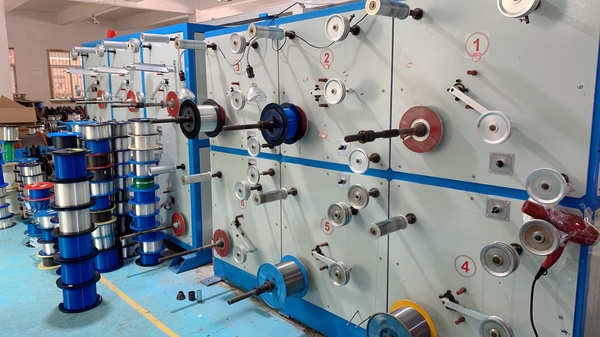
Recommendations & Best Practices (using JXL as example)
-
Match span rating to route: don’t assume a generic ADSS will handle long spans; ask for span charts/pull tension limits.
-
Prefer dry-block for frequent splicing: reduces messy gel cleanup.
-
Specify G.657 fibers when duct bending or tight pole attachments are expected.
-
Order sample reels and mechanical test reports (tensile, torsion, aging) before large procurement.
-
Consider UV-stabilized double jackets for coastal or high-sun exposure.
-
Choose established vendors (Prysmian/Nexans/JXL) for documented warranty and support.
Installation, Lifecycle and Maintenance
-
Follow manufacturer pulling tension and minimum bend radius.
-
Inspect pole hardware and anchors — ADSS transmits load to supports.
-
Monitor sag, temperature-related tension changes, and ice loads seasonally.
-
Keep splicing areas accessible; dry-block simplifies field work.
Conclusion
ADSS is a reliable, cost-effective aerial fiber solution when engineered to local span, environmental and capacity requirements. Prices per meter vary widely — always obtain supplier-specific quotes with technical datasheets. Vendors like JXL can be your source for customizable ADSS products; verify test reports and regional installation support before large purchases.
We are a professional fiber optic manufacturer, specializing in the production of fiber optic cables, including indoor fiber optic cables, outdoor fiber optic cables, non-metallic fiber cables, flame-retardant fiber cables, bundle fiber cables, ribbon fiber cables, armored fiber optic cables, data center cables, submarine cables, optical-electric composite cables, base station field cables, UAV fiber optic cables, and sensing fiber cables.
Our fiber optic cables are available at competitive prices, ensuring high stability and long service life.
In addition, we also manufacture supporting fiber optic accessories, such as optical splitters, multimode fibers, fiber connectors, fiber patch cords, fiber adapters, Cat5 cables, Cat6 cables, and Cat7 cables.
We are an Optical fiber cable ADSS manufacturer, offering Optical fiber cable ADSS wholesale and competitive Optical fiber cable ADSS prices.
If you are looking for a reliable Optical fiber cable ADSS supplier, please feel free to contact us for more information.
Some images and text in this article are sourced from the internet. If any issues arise, please contact us for resolution.
HI
Do you sell 144f MICROBLOWN SM G652D black fibre optic cable x 20km
yes